
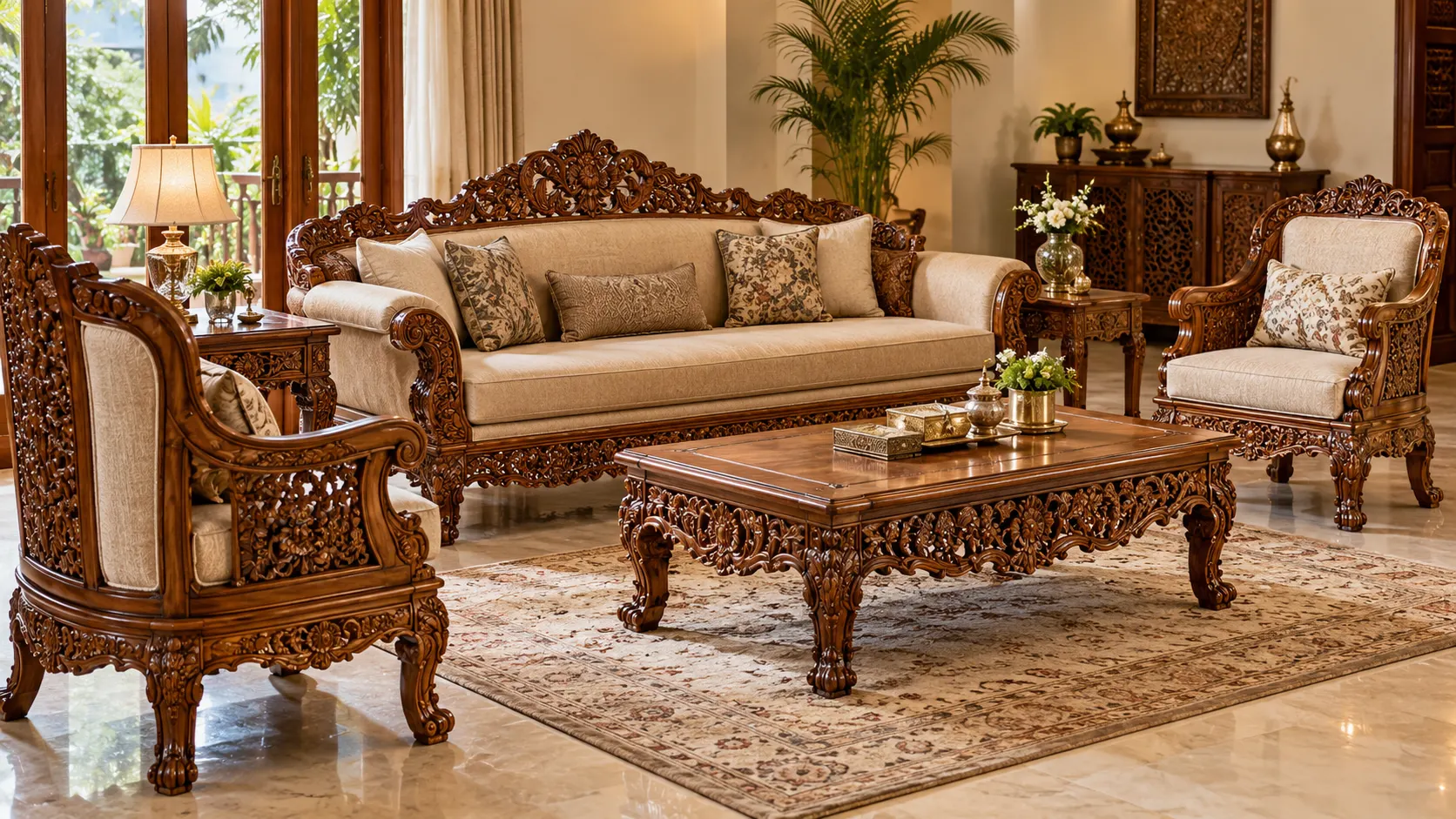
Saharanpur wood carving furniture stands out for its decorative patterns, detailed workmanship, and connection to a well-established Indian woodworking tradition. From intricately carved wooden chairs to decorative tables, bed frames, screens, and cabinets, carved furniture can bring a distinctive character to residential interiors.
Saharanpur, Uttar Pradesh, is recognised as an important woodcarving and furniture centre. The Government of Uttar Pradesh’s One District One Product (ODOP) portal describes the regional craft through floral, foliate, geometric, and jaali patterns carved into furniture and decorative products. It also records the GI certificate date for Saharanpur Wood Craft as March 31, 2014.
odopup.in+1
What makes this furniture interesting is the relationship between the material, the carved design, and the practical purpose of the finished product. A decorative headboard, for example, must look attractive while remaining suitable for its intended use. A carved chair needs an appealing design as well as a stable structure and comfortable seating.
Whether you are furnishing a new home, updating a living room, or looking for distinctive wooden furniture, understanding the craft can help you appreciate its decorative details and make a more informed purchase.
Fatima Handicraft’s official website provides a starting point for exploring its furniture range. This guide explains the heritage behind Saharanpur wood carving furniture, the patterns and techniques associated with the craft, popular furniture styles, quality checks, maintenance, and important considerations before buying.
1. The Heritage Behind Saharanpur Wood Carving Furniture
Saharanpur has a long association with decorative woodworking. The Government of India’s Development Commissioner (Handicrafts) describes Saharanpur woodcraft as a recognised regional tradition involving carved wooden articles and furniture. Its reference discusses the influence of Indian, Persian, and Mughal-inspired motifs in the region’s designs.
Handicrafts+1
The craft is not defined by a single furniture design. Instead, it encompasses a range of decorative approaches that can be adapted to different products and interior styles.
A recognised regional craft
The ODOP programme identifies Saharanpur wood carving as one of the district’s recognised traditional products. The regional designs include floral patterns, leaves, geometric detailing, and jaali work.
odopup.in
These motifs can appear on furniture panels, chair backs, headboards, decorative screens, trays, and other wooden objects. The scale and complexity of the pattern vary according to the piece.
The GI registration is an important marker of the craft’s regional identity. However, it does not mean that every carved wooden product sold in Saharanpur automatically qualifies as GI-registered Saharanpur Wood Craft. Product-specific claims should be supported by appropriate documentation.
The contribution of skilled artisans
Decorative wood carving requires control over cutting depth, shape, spacing, and the relationship between individual motifs. Even a repeating pattern needs careful execution to create a balanced appearance.
Different stages may involve different skills. Wood preparation, carving, sanding, assembly, and finishing all contribute to the final piece. The Government of India’s handicrafts reference describes these distinct processes within the craft.
Handicrafts+1
This is one reason to look beyond the design shown in a photograph. The finished product reflects not only the carved pattern but also the quality of the surface preparation, the joints, and the way the furniture is assembled.
2. What Makes the Carving Patterns Distinctive?
One of the most recognisable features of Saharanpur woodcraft is the variety of decorative motifs. These patterns can change the character of a furniture piece, making it visually prominent or adding subtle detail.
Floral and foliate patterns
Floral designs use flowers, petals, stems, and related decorative forms. Foliate patterns draw on leaves, vines, and branching shapes.
Such motifs can be carved into a bed’s headboard, the back of a chair, the edge of a table, or the panels of a cabinet. Their appearance depends on the depth of the carving, the scale of each element, and the amount of open space surrounding the design.
A larger floral pattern may create a bold focal point, while delicate detailing can give a smaller piece a more restrained appearance.
Geometric patterns
Geometric carving relies on repeating shapes, lines, and structured arrangements. These patterns can create a more symmetrical or architectural effect than flowing floral designs.
Geometric details can work in both traditional and contemporary settings, particularly when combined with simpler furniture shapes.
When choosing a product, consider whether the pattern complements the other shapes and finishes in the room.
Jaali work
Jaali refers to decorative lattice or openwork patterns. In furniture and screens, this style can introduce visual detail through the arrangement of openings and carved sections.
Jaali panels may be used as decorative inserts, partitions, or elements within furniture designs. Because openwork involves removing material from the panel, it is important to assess the construction and intended use of the finished piece.
A decorative appearance should not replace questions about strength, stability, and suitability.
Combining motifs with natural wood grain
Carving is only one part of the overall appearance. The wood grain, colour, surface finish, and lighting also influence the finished result.
A darker finish may emphasise shadows in deep carving, while a lighter finish can make the pattern appear more subtle. The actual effect depends on the wood and finishing materials used.
When possible, examine a sample or finished product in person. Photographs may not convey the true colour, texture, or depth of the carving.
3. How Wood Selection Influences the Finished Furniture
The material affects how furniture looks, how it can be shaped, and how it should be maintained. The right choice depends on the design and construction of the individual product.
Government handicrafts references identify woods including sheesham and teak among the materials associated with Saharanpur woodcraft.
Handicrafts+1
However, a particular furniture item should not be assumed to be made from a specific wood simply because it features regional carving.
Sheesham wood
Sheesham is associated with Indian furniture and decorative woodworking. Its grain and natural colour variations can contribute to the appearance of carved designs.
If you are considering a sheesham product, ask the seller to confirm the species and identify which components are made from it.
The frame, panels, decorative details, and internal supports may use different materials. Written specifications help establish what the product actually contains.
Teak and other timber options
Teak is another wood used in furniture and woodworking. Other timber varieties may also be suitable for particular designs and production methods.
Instead of assuming one wood is always superior, consider the furniture’s intended use, construction, finish, and maintenance requirements.
Ask for a description of the actual material, its role in the product, and the recommended care instructions.
Solid wood and engineered wood
Solid wood is made from natural wood, while engineered wood products may be manufactured using wood fibres, particles, veneers, or bonded layers.
Both categories can be useful for different furniture applications. What matters is whether the material suits the intended use and whether its specifications are described accurately.
Before making a purchase, ask:
- Which material is used in the primary frame?
- What are the panels and internal components made from?
- Does the item contain veneers or other surface treatments?
- Which finish has been applied?
- What care is recommended for the material?
These questions are especially useful when comparing two products that look similar but differ in construction.
4. Popular Styles of Saharanpur Wood Carving Furniture
Carved furniture can be traditional, contemporary, rustic, or designed to combine several influences. Understanding the differences can help you select a piece that suits your interior.
Traditional carved furniture
Traditional designs may feature elaborate headboards, decorative chair backs, carved table legs, or ornamental cabinet fronts.
These styles can work well in rooms with warm colours, traditional textiles, patterned rugs, and other decorative elements. A prominent carved piece may be enough to establish the visual theme without making every other item equally elaborate.
Before choosing heavily carved furniture, consider the dimensions of the room and how much visual detail it can accommodate.
Contemporary carved furniture
Contemporary furniture can use carving more selectively. A simple bed frame might include a decorative central panel, while a table might have a restrained carved edge.
This approach can suit buyers who appreciate craftsmanship but prefer cleaner silhouettes and less ornamentation.
Combining a detailed wooden piece with simpler furniture often creates a balanced interior.
Rustic-inspired furniture
Rustic designs may highlight natural-looking grain, warm wood tones, textured surfaces, and straightforward forms.
Although rustic furniture can be combined with decorative carving, the term describes a style rather than a particular wood species or construction method.
Ask what material and finish have been used instead of assuming that a rustic appearance indicates a specific product specification.
Mixed-material designs
Wood carving can also be combined with glass, metal, stone, or upholstery. Government handicrafts references discuss the use of materials such as brass and other decorative elements alongside wood in regional craft products.
Handicrafts+1
A mixed-material table or chair can bring contrast to an interior while retaining the visual character of carved wood.
Check the connections between the different materials and confirm that the product is stable and suitable for its intended use.
5. Where Carved Wooden Furniture Can Be Used
The same decorative technique can be applied to furniture with very different purposes. Selecting the right product requires attention to both its appearance and practical function.
Carved wooden beds
A carved wooden bed can become the focal point of a bedroom. Headboards may feature floral panels, geometric details, or more elaborate decorative patterns.
Before buying, measure the room and confirm the full external dimensions of the frame. Also check mattress compatibility, support structure, finish, and any storage features.
Fatima Handicraft’s premium bed collection is a relevant category to explore when comparing bedroom furniture styles. Confirm the actual materials and specifications of any individual product before ordering.
Carved sofa frames
Wooden sofa frames can incorporate decorative arms, exposed structural details, or carved sections along the back and legs.
When evaluating a sofa, check the frame, joints, cushion support, upholstery, seating comfort, and overall dimensions. Intricate carving should not be the only factor guiding the decision.
You can browse the Fatima Handicraft sofa set collection for examples of sofa styles listed by the business.
Carved dining furniture
A carved dining set can introduce a traditional decorative element into a dining room. Carving may appear on chair backs, table legs, or the edges of a tabletop.
Check the table dimensions, chair comfort, stability, and room available for moving around the furniture. The finish should also suit the expected cleaning routine.
The dining furniture collection offers a starting point for exploring the listed dining furniture categories.
Tables, cabinets, and decorative panels
Smaller furniture pieces can showcase carving without occupying as much space as a bed or dining set.
A carved side table, cabinet front, or decorative panel may provide visual interest while serving a practical purpose. When selecting these pieces, consider where they will be placed and how the carving will relate to nearby surfaces and colours.
For everyday furniture, balance decorative value with useful dimensions, storage, and ease of maintenance.
6. How to Recognise Careful Craftsmanship
A distinctive pattern can make carved furniture appealing, but the quality of construction remains essential.
Examine the details of the carving
Look at the consistency of the pattern, the definition of individual shapes, and the transitions between carved and flat areas.
Inspect corners and recessed portions carefully. Uneven edges, unfinished areas, or visible damage may indicate that a piece requires closer examination.
Remember that different carving styles intentionally create different levels of depth and texture. The objective is not to expect every piece to look identical, but to check whether the execution is consistent with the design.
Check joints and structural components
Inspect the areas where furniture components connect, including chair legs, bed frames, table supports, sofa frames, and cabinet assemblies.
Look for unexpected movement, visible gaps, poor alignment, or rough assembly.
If possible, test the stability of tables and chairs on a level surface. Open drawers and doors to check their movement, and ask about the construction of parts that are not visible.
Inspect sanding and finishing
Examine the surface under good lighting. Check for rough patches, inconsistent colour, scratches, chipped edges, or areas where the finish appears uneven.
On carved pieces, attention should extend to the recessed parts of the design, not just the flat surfaces that are easiest to inspect.
Ask which finish has been applied and what cleaning method is appropriate.
Request specific product information
If material or construction details affect your decision, request written confirmation.
A photograph cannot establish whether a product is solid wood, whether a particular wood species has been used, or how the internal frame is constructed.
The more clearly the product specifications are documented, the easier it becomes to compare furniture options.
7. How to Choose Carved Furniture for Your Home
The most elaborate piece is not automatically the most suitable. Furniture should be chosen according to room size, everyday use, existing décor, and budget.
Consider the available space
Measure the intended furniture location before buying. For large pieces, check doorways, staircases, corridors, and lifts to ensure the furniture can be delivered to the room.
Leave enough space for walking, opening drawers, and using the furniture comfortably.
A large carved bed may work well in a spacious bedroom but overwhelm a compact one. Similarly, a dining table should accommodate the household without making the room difficult to navigate.
Coordinate colours and textures
Wood tones can vary, and finishes influence how carved details appear.
Choose colours that complement the flooring, walls, upholstery, and other furniture. You do not necessarily need to match every wooden item exactly, but the overall combination should feel intentional.
If the carved furniture is already visually prominent, simpler accessories can provide balance.
Think about everyday maintenance
Deeply carved surfaces can collect dust in recessed areas and may require more careful cleaning than plain surfaces.
Upholstery, glossy coatings, and other materials also have their own care requirements.
Ask for instructions before buying, particularly when the product combines several materials or has a specialised finish.
Establish a budget
Set a realistic spending limit based on the furniture you need and the other items required for the room.
Compare products with similar dimensions, materials, finish, and construction. Do not rely on the headline price alone when evaluating whether a particular piece offers good value.
8. Caring for Saharanpur Wood Carving Furniture
Regular, appropriate maintenance helps preserve the appearance of carved wooden furniture. The correct method depends on the wood and the finish used on the product.
Dust carved recesses regularly
Use a soft, clean cloth for routine dusting. For intricate carving, carefully clean recessed sections where dust can collect.
Avoid abrasive tools that could scratch the surface or damage small decorative details.
Clean spills promptly
Wipe spills promptly using a soft cloth and the method recommended for the specific finish.
Do not assume that every wooden surface can tolerate the same cleaning products. If the care instructions are unclear, ask the supplier before applying polish, oils, waxes, or cleaners.
Protect the finish
Prolonged direct sunlight may alter the appearance of some finishes, while moisture and environmental changes can affect wooden furniture.
Follow the manufacturer’s care instructions and avoid exposing the furniture to repeated wetting or unsuitable cleaning treatments.
Check structural components periodically
Inspect joints, supports, hinges, and other functional parts from time to time.
For significant damage or finish deterioration, seek appropriate professional advice rather than attempting an unsuitable repair.
Routine maintenance is particularly important for detailed furniture because visible decorative areas may need careful cleaning alongside the structural components.
9. What to Ask Before Buying Carved Wooden Furniture
Before committing to a purchase, make sure you understand exactly what the seller is offering.
Ask about the wood species, the materials used in the frame and panels, the carving method where relevant, the surface finish, and the dimensions of the finished product.
Confirm whether the item is available in its displayed form or whether the images show a representative design. If a product is described as handmade or made from a particular wood, request details that substantiate the description.
For customised furniture, obtain written confirmation of the design, measurements, finish, total price, estimated completion time, and delivery arrangements.
Review the applicable payment, cancellation, return, and damage-reporting terms before placing the order. Keep the quotation and approved specifications for reference.
Fatima Handicraft’s Contact Us page is a relevant starting point for discussing furniture requirements and confirming which options are available for a particular order.
Frequently Asked Questions
1. What makes Saharanpur wood carving furniture special?
Saharanpur woodcraft is recognised for its decorative vocabulary, including floral, foliate, geometric, and jaali patterns. The regional craft combines woodworking with detailed carving and finishing techniques. Individual products differ in their materials, construction, and level of decoration.
odopup.in+1
2. Is all furniture sold in Saharanpur hand-carved?
No. A furniture seller’s location does not establish that every item is hand-carved or produced using traditional methods. Ask about the particular product’s construction and carving process if these features are important to you.
3. Which wood is commonly associated with Saharanpur woodcraft?
Government handicrafts references identify sheesham and teak among the woods associated with the craft. The actual wood used in an individual product should be confirmed with the seller rather than inferred from colour or appearance.
Handicrafts+1
4. Is carved wooden furniture suitable for modern interiors?
Yes. Carved furniture can provide contrast and visual interest in contemporary spaces. Pair more detailed pieces with simpler furnishings and consider the proportions, colours, and textures already present in the room.
5. How can I check the quality of carved wooden furniture?
Inspect the carving, edges, finish, joints, and supporting structure. Check the stability of the furniture and the operation of doors or drawers where relevant. Ask for material and construction details before purchasing.
6. How should I clean carved wooden furniture?
Dust regularly with a soft cloth and pay attention to recessed decorative areas. Follow the care instructions for the actual finish, and avoid unsuitable cleaning products or abrasive tools.
7. Can carved wooden furniture be customised?
Customisation depends on the product and the supplier. Confirm the available design changes, dimensions, materials, finish, price, and delivery arrangements before placing a custom order.
8. Where can I explore furniture from Fatima Handicraft?
Visit the Fatima Handicraft website to begin exploring the business’s listed furniture categories. Confirm current product details and availability directly with the business before ordering.
Conclusion: Appreciate the Craft, Choose Carefully
Saharanpur wood carving furniture combines decorative design with a recognised regional woodworking tradition. Its floral, foliate, geometric, and jaali motifs offer a wide range of visual possibilities, from statement furniture to smaller decorative pieces.
odopup.in+1
The best purchase, however, requires more than appreciation of the carving. Materials, construction, finishing, dimensions, comfort, maintenance, and purchase terms should all be considered.
Take time to inspect the furniture, ask specific questions, compare equivalent products, and obtain written confirmation of important details. These steps help you choose an item that suits both the style of your home and the way you live.
Explore the Fatima Handicraft furniture collection to begin reviewing the listed categories, or visit the Contact Us page to discuss your requirements and confirm product-specific information.
A well-chosen carved furniture piece can contribute lasting visual character to an interior. The most suitable option is the one whose craftsmanship, specifications, and everyday practicality meet your expectations.


Leave a Reply