
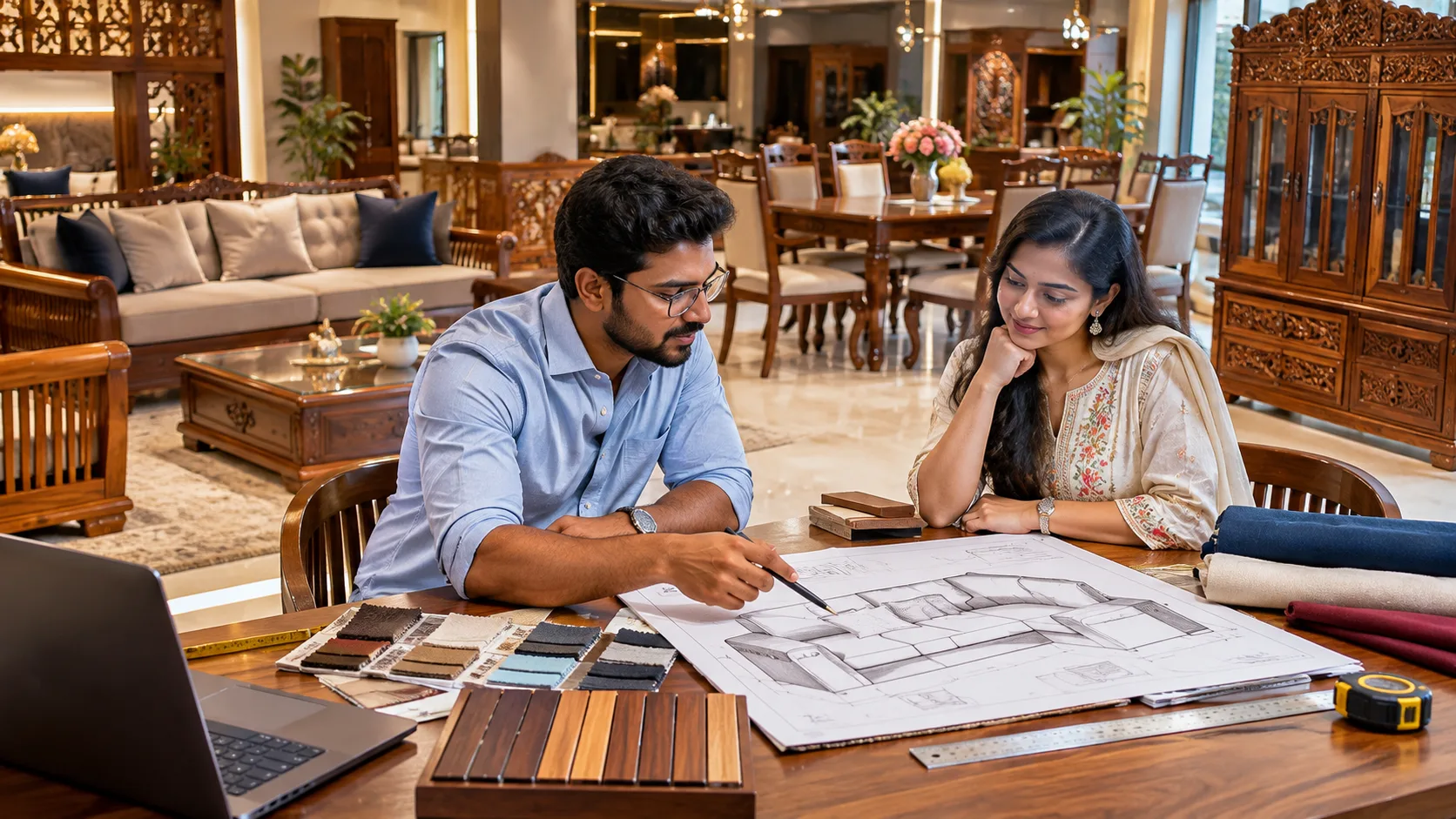
Furniture plays an important role in making a home or workplace comfortable, organised, and visually appealing. However, standard furniture does not always match every room’s dimensions, storage requirements, or interior style. This is where custom furniture becomes a useful option.
With custom furniture in Saharanpur, homeowners and businesses can discuss furniture designs based on their available space, preferred appearance, and functional requirements. Whether you need a wardrobe for a compact bedroom, a sofa for a particular living room layout, a dining table for your family, or furniture for an office, a customised approach allows you to plan the details before ordering.
But how does the process actually work?
Generally, it involves understanding the requirements, discussing the design, taking measurements, selecting materials and finishes, confirming the quotation, and coordinating production and delivery. The exact stages and approvals depend on the furniture provider and the project.
In this guide, we explain each stage and share practical tips to help you plan your custom furniture project with confidence.
What Is Custom Furniture?
Custom furniture is furniture planned or modified according to a customer’s specific requirements rather than selected only from standard, ready-made options.
The customisation may involve:
- Furniture dimensions
- Design and overall shape
- Storage compartments
- Wood or other construction materials
- Upholstery and fabric selection
- Colour and surface finish
- Decorative details
- Functional features
For example, a standard wardrobe may not fit a bedroom with an unusual wall measurement. A custom wardrobe can be planned around the available width, height, storage needs, and preferred door style.
Similarly, a dining table can be discussed in a size and finish that complements the dining area.
The purpose is to make the furniture more suitable for the space and the people who will use it.
Why Choose Custom Furniture in Saharanpur?
Custom furniture can be useful when standard furniture does not meet your expectations or fit your room properly.
Here are some reasons people consider customised furniture.
1. Better Use of Available Space
Every home has different room dimensions. Some bedrooms have limited floor space, while certain living rooms have unusual corners or wall layouts.
Custom furniture allows you to discuss dimensions that suit the available area.
Examples include:
- A wardrobe planned for a specific wall
- A compact study table for a small room
- A sofa designed around a living room layout
- A dining table suitable for the available dining area
- Storage furniture designed for a particular corner
Accurate measurements are important to ensure that the finished furniture fits the intended location.
2. Design That Matches Your Interior
Furniture should complement the existing interior rather than look disconnected from it.
With customised options, you can discuss colours, finishes, shapes, upholstery, and decorative details.
For example, a home with warm wooden interiors may suit a natural wood finish, while a contemporary room may look better with simple shapes and neutral colours.
3. Functional Storage Solutions
Storage requirements vary from one household to another.
A wardrobe may need more hanging space, a bed may require storage underneath, and a living room cabinet may need separate compartments for different items.
Custom planning gives you an opportunity to explain these requirements before the furniture is made.
4. Personalised Furniture for Different Rooms
You may need different types of furniture for different spaces.
Custom furniture planning can cover:
- Living room furniture
- Bedroom furniture
- Dining furniture
- Study and office furniture
- Storage units
- Reception and commercial furniture
Fatima Handicraft describes its furniture services as covering homes, offices, and commercial spaces, with an emphasis on combining style, comfort, and functionality.
FATIMA HANDICRAFT+1
How the Custom Furniture Process Works
The following is a practical step-by-step guide to a typical custom furniture project. It explains what you can prepare and discuss with the furniture provider. The exact workflow, timelines, approval stages, and production arrangements should be confirmed directly with the seller.
Step 1: Identify Your Furniture Requirements
Start with what you need, not just what looks attractive.
Before contacting a furniture maker, decide which furniture items you want to customise.
For example:
| Room | Possible custom furniture |
| Living room | Sofa set, TV unit, centre table |
| Bedroom | Bed, wardrobe, side tables |
| Dining area | Dining table, dining chairs |
| Study room | Study table, storage unit |
| Office | Office desk, seating, storage |
| Reception | Visitor seating, reception furniture |
Also think about how the furniture will be used.
A family with children may prioritise practical surfaces and easy maintenance. Someone furnishing a home office may need a desk with sufficient workspace and storage.
What to prepare:
- Type of furniture
- Intended room
- Number of people using it
- Main functional requirements
- Approximate budget
- Preferred design style
Having these details ready can make the first discussion more productive.
Step 2: Discuss Your Design Preferences
Share the appearance and style you want.
The next important part is explaining your preferred furniture design.
You can collect reference photographs from furniture websites, magazines, or interior design inspiration pages. These images help communicate the overall appearance you have in mind.
Discuss details such as:
- Traditional or modern design
- Simple or decorative appearance
- Straight or curved shapes
- Open or closed storage
- Upholstered or non-upholstered seating
- Light or dark finish
- Decorative carving or minimal detailing
It is also useful to explain which parts of a reference design you like. You may prefer the shape of one sofa, the colour of another, and the storage arrangement of a third.
Do not assume that every reference image can be reproduced exactly. Ask the furniture provider which design elements and materials can be accommodated.
Step 3: Take Accurate Measurements
Measurements help determine whether the proposed design will fit.
This is one of the most important stages of custom furniture planning.
Measure the space where the furniture will be placed. Do not rely only on approximate room dimensions.
For example, when planning a wardrobe, check:
- Available wall width
- Floor-to-ceiling height
- Available depth
- Door-opening clearance
- Nearby switches and electrical points
- Window and skirting positions
For a sofa, consider:
- Total available wall length
- Seating capacity
- Room entry and movement space
- Doorway and staircase access
- Distance from other furniture
For a dining table, check the table area and the space needed to pull chairs out comfortably.
Practical tip: Keep a written record of the measurements and share them with the furniture provider. Ask who will take the final production measurements and how they will be confirmed before manufacturing.
Step 4: Select Materials and Finishes
The materials influence appearance, maintenance, and performance.
After discussing the design and dimensions, consider the materials and finishes.
Depending on the furniture type and available options, you may need to discuss:
Wood and frame materials
Different wood and engineered materials have different appearances and construction characteristics. Ask the provider to specify the material being used rather than relying on general descriptions such as premium wood.
Upholstery
For sofas and chairs, fabric selection affects the look, feel, and cleaning requirements.
Consider:
- Colour
- Texture
- Cleaning requirements
- Everyday usage
- Suitability for children or pets
Surface finish
The finish can influence the overall furniture appearance. Options may include natural-looking finishes, darker tones, lighter shades, or other available treatments.
Hardware and fittings
For wardrobes, cabinets, and storage furniture, ask about hinges, handles, drawer channels, and other fittings.
Fatima Handicraft’s official website describes its furniture offering in terms of quality craftsmanship and materials. Its product pages also mention customisation in selected categories, including sofa sizes, colours, fabrics, and finishes. Confirm the exact material and finish options available for your project before ordering.
FATIMA HANDICRAFT+1
Step 5: Confirm the Design and Specifications
Make sure the important details are clear before production.
Once the design, measurements, and materials have been discussed, ask for the final specifications in writing.
These should ideally include:
| Detail | What to confirm |
| Furniture type | Exact item and model or design |
| Dimensions | Width, height, and depth |
| Materials | Frame, panels, wood, or other materials |
| Finish | Colour and surface treatment |
| Upholstery | Fabric type and colour, if applicable |
| Storage | Drawers, shelves, and compartments |
| Hardware | Handles, hinges, and fittings |
| Quantity | Number of units |
| Price | Final quoted amount |
| Delivery | Expected arrangement and charges |
If a drawing, reference image, or design specification is available, review it carefully.
Pay particular attention to measurements and functional details. A small change in a wardrobe’s internal layout or a sofa’s overall depth can affect how useful the furniture is after installation.
Step 6: Review the Quotation and Payment Terms
Before confirming the order, understand the total cost and the terms of the project.
A custom furniture quotation may depend on several factors:
- Furniture dimensions
- Material selection
- Design complexity
- Carving and decorative work
- Upholstery
- Hardware and accessories
- Quantity
- Delivery and installation requirements
Ask whether the quoted amount includes transportation, installation, and any additional finishing work.
Also clarify:
- Advance payment requirements
- Remaining payment schedule
- Order confirmation procedure
- Expected completion period
- Changes or cancellation terms
- What happens if specifications need to be revised
Do not assume that custom furniture has a fixed price. Request a project-specific quotation based on the confirmed specifications.
Step 7: Production and Craftsmanship
The approved specifications guide the furniture-making work.
After the order and production details are confirmed, the furniture can move into its manufacturing stage, according to the provider’s process.
The construction requirements differ by furniture type.
For example:
- A sofa involves frame construction, cushioning, upholstery, and finishing.
- A wardrobe involves structural panels, storage sections, doors, and hardware.
- A wooden dining table involves the tabletop, supporting structure, joints, and finish.
- A chair involves the frame, seat, backrest, and any upholstery.
For a customised project, ask whether progress updates or photographs can be shared during production.
It is also useful to confirm how any approved design changes will be handled. Changes after manufacturing begins may affect the cost or completion schedule.
Step 8: Final Inspection Before Delivery
Before accepting the furniture, check that the completed item matches the agreed specifications.
A practical inspection checklist includes:
- Correct overall dimensions
- Correct colour and finish
- Matching design details
- Stable construction
- Properly functioning drawers and doors
- Secure handles and fittings
- Neat upholstery, where applicable
- No visible damage or major finishing defects
If something differs from the approved specifications, discuss it with the provider before final acceptance.
Step 9: Delivery and Installation
The final stage is getting the furniture safely into its intended space.
Large furniture pieces may need careful transportation and installation.
Before delivery, confirm:
- Delivery date and approximate time
- Transportation charges
- Packaging arrangements
- Access through doors and staircases
- Whether installation is included
- Whether old furniture needs to be moved
- Who will handle any assembly
Fatima Handicraft’s official Contact Us page specifically lists Delivery & Installation as one of its services and describes safe delivery and professional installation as part of its customer service offering. Confirm the arrangements applicable to your particular order.
FATIMA HANDICRAFT
Which Furniture Can You Customise?
Customisation depends on the product category, design, materials, and the furniture provider’s capabilities.
Fatima Handicraft has dedicated product pages for several furniture categories. Here are some examples of how you might plan a customised project.
Custom Sofa Sets
Sofas | Dhyana Furniture & More
A sofa should suit the living room’s dimensions, seating needs, and interior style.
You may want to discuss:
- L-shaped or straight sofa layouts
- Seating capacity
- Fabric and colour
- Cushioning preferences
- Frame and finish
- Overall dimensions
Fatima Handicraft’s official Sofa Set Collection lists L-shape sofas, recliner sofas, wooden frame sofas, luxury sofas, and fabric and leather sofas. It also mentions customisable colours, fabrics, sizes, and finishes.
FATIMA HANDICRAFT
Custom Beds
MANŽELSKÁ ČALÚNENÁ POSTEĽ S MATRACOM TRINITY 180X200 RIVIERA 21
A custom bed can be planned around mattress dimensions, bedroom space, storage needs, and preferred headboard design.
Discuss:
- Bed size
- Headboard style
- Storage requirements
- Frame material
- Finish
- Mattress compatibility
The official Premium Bed Collection mentions custom sizes and designs, along with storage options and different finishes.
FATIMA HANDICRAFT
Custom Chairs
Why Choose Custom Furniture for Your Home in India | Alankaram
Chairs can be selected or planned according to the space and intended use.
Possible requirements include:
- Dining chair dimensions
- Upholstery colour
- Backrest style
- Frame finish
- Seat cushioning
- Office or lounge seating requirements
Fatima Handicraft’s Chair Collection features dining, accent, lounge, office, and wooden chairs. Its page mentions customisation in colours, fabrics, and finishes.
FATIMA HANDICRAFT
Custom Tables and Office Desks
Tables and desks should be planned according to the activities performed on them and the available floor space.
You may need to consider:
- Tabletop dimensions
- Height
- Shape
- Storage compartments
- Cable management for desks
- Surface finish
- Seating clearance
Fatima Handicraft’s Table Collection includes coffee tables, centre tables, dining tables, study tables, and office desks. Its official page mentions custom-made solutions in different sizes, shapes, and finishes.
FATIMA HANDICRAFT
Custom Wardrobes and Storage Furniture
Wardrobes and storage units are particularly useful custom furniture projects because their dimensions and internal layouts can be adjusted to the room and storage requirements.
Before ordering, discuss:
- Hanging sections
- Shelves
- Drawers
- Door style
- Internal partitions
- External finish
- Available wall space
Explore the Fatima Handicraft Wardrobe Collection for the current wardrobe range and confirm which customised options are available.
Custom Furniture vs Ready-Made Furniture: Which Should You Choose?
Both options have advantages. The right choice depends on your requirements, timeline, budget, and preferred design.
| Factor | Custom Furniture | Ready-Made Furniture |
| Dimensions | Can be planned around requirements | Usually fixed |
| Design | Personalised options may be available | Selected from existing designs |
| Material and finish | Depends on available customisation | Depends on the product |
| Production time | May require a manufacturing period | Often available sooner |
| Price | Depends on specifications | Depends on the selected product |
| Best suited for | Specific space or functional requirements | Standard requirements and quicker furnishing |
Choose custom furniture when:
- Your room has unusual dimensions.
- You need specific storage arrangements.
- You want furniture to match existing interiors.
- Standard products do not meet your functional needs.
Choose ready-made furniture when:
- Standard dimensions suit your room.
- You prefer an existing design.
- You need furniture sooner.
- You have found a product that meets your requirements.
Neither option is automatically better. Compare the actual product specifications and total cost before deciding.
How to Prepare for a Custom Furniture Consultation
A little preparation can make your first discussion more useful.
Before contacting a furniture provider, prepare the following:
1. Room photographs
Take clear photographs from different angles. Include the walls, doors, windows, and surrounding furniture.
2. Measurements
Record the available width, height, and depth of the proposed furniture location.
3. Design references
Save two or three reference images showing the style you prefer.
4. Functional requirements
Write down what the furniture needs to do. For example, a wardrobe may require extra hanging space, while an office desk may need drawers and cable access.
5. Budget range
Decide on an approximate spending range. This can help guide discussions about dimensions, materials, and finishes.
6. Preferred timeline
Share when you need the furniture and ask the provider whether the project can be completed within that period.
7. Questions
Prepare questions about materials, maintenance, installation, warranty, delivery, and payment terms.
This information can help the furniture provider understand your requirements more clearly.
Common Mistakes to Avoid When Ordering Custom Furniture
Custom furniture requires careful planning. Avoiding common mistakes can reduce the possibility of misunderstandings.
1. Ordering Without Accurate Measurements
An attractive design may not fit if the dimensions are incorrect. Always verify the available space and final product measurements.
2. Choosing a Design Only by Appearance
A beautiful piece should also be practical. Consider how it will be used and whether it meets your storage or seating needs.
3. Not Confirming Materials
Ask for exact material descriptions. Do not assume that a particular wood, fabric, or fitting is included unless it is mentioned in the quotation.
4. Ignoring the Room Layout
Furniture should not block doorways, windows, switches, or movement areas.
5. Leaving Specifications Verbal
Important details should be documented, especially dimensions, materials, finishes, price, and delivery terms.
6. Not Discussing Installation
Large wardrobes, beds, and other furniture pieces may require assembly or installation. Confirm the arrangements in advance.
7. Making Changes Too Late
Late design changes may affect production, price, and completion time. Try to finalise the major specifications before manufacturing begins.
Why Consider Fatima Handicraft for Custom Furniture in Saharanpur?
Fatima Handicraft’s official website presents furniture solutions for homes, offices, and commercial spaces. Its stated approach combines design, comfort, functionality, and craftsmanship.
FATIMA HANDICRAFT
The website’s Contact Us page specifically lists three relevant services:
- Custom Furniture Design: Tailor-made furniture solutions intended to match the customer’s space, style, and functional requirements.
- Interior Furniture Solutions: Furniture for living rooms, bedrooms, offices, and commercial spaces.
- Delivery & Installation: Safe delivery and professional installation arrangements.
FATIMA HANDICRAFT
The website also has dedicated collections for sofas, beds, chairs, tables, wardrobes, dining furniture, and mandirs. Selected category pages mention customisation options such as sizes, colours, fabrics, shapes, and finishes.
If you are planning a furniture project, start by exploring the relevant category and preparing your room measurements and design references.
Visit the Fatima Handicraft website or use the Contact Us page to discuss your requirements.
Frequently Asked Questions (FAQs)
1. What is custom furniture?
Custom furniture is furniture planned or modified according to specific requirements, such as room dimensions, design preferences, materials, finishes, and storage needs.
2. How does the custom furniture process work?
A typical process involves discussing requirements, sharing design references, taking measurements, selecting materials, confirming specifications and pricing, arranging production, inspecting the finished furniture, and coordinating delivery and installation. The exact process depends on the provider.
3. Is custom furniture more expensive than ready-made furniture?
Not necessarily in every case. The price depends on the dimensions, materials, design complexity, finish, fittings, and manufacturing requirements. Request a detailed quotation to compare options.
4. Can I customise furniture according to my room size?
Customisation may allow furniture to be planned around your available space. Confirm the permitted dimensions and measurement process with the furniture provider before ordering.
5. What information should I share when ordering custom furniture?
Share the furniture type, room measurements, reference photographs, preferred design, materials or finishes, functional requirements, approximate budget, and expected timeline.
6. Which furniture items can be customised at Fatima Handicraft?
Its official website lists several furniture categories, including sofas, beds, chairs, tables, wardrobes, dining furniture, and mandirs. Specific customisation options vary by category and should be confirmed directly.
7. Can I select the fabric and colour for a custom sofa?
Fatima Handicraft’s official Sofa Set page mentions customisable colours, fabrics, sizes, and finishes. Contact the team to confirm the available choices for your selected design.
8. Does Fatima Handicraft provide delivery and installation?
Yes. Its official Contact Us page lists Delivery & Installation as a service. Confirm the applicable delivery area, charges, schedule, and installation details for your order.
9. How long does custom furniture take to complete?
The completion period depends on the furniture type, design, materials, workload, and delivery arrangements. Ask for an estimated timeline before confirming the order.
10. How can I contact Fatima Handicraft for custom furniture?
You can visit the official Contact Us page to submit your requirements and enquire about customised furniture solutions.
Conclusion
Custom furniture is a practical way to plan furniture around your home’s dimensions, personal style, and everyday requirements. A well-planned project starts with understanding what you need and continues through design discussions, accurate measurements, material selection, specification approval, production, and delivery.
If you are exploring custom furniture in Saharanpur, prepare your room measurements, reference images, preferred finishes, and functional requirements before contacting a furniture provider. Also make sure the final quotation, product specifications, delivery arrangements, and installation details are clearly confirmed.
Fatima Handicraft’s official website describes custom furniture design, interior furniture solutions, and delivery and installation services. Explore its furniture collections and contact the team to discuss a furniture solution for your space.


Leave a Reply