
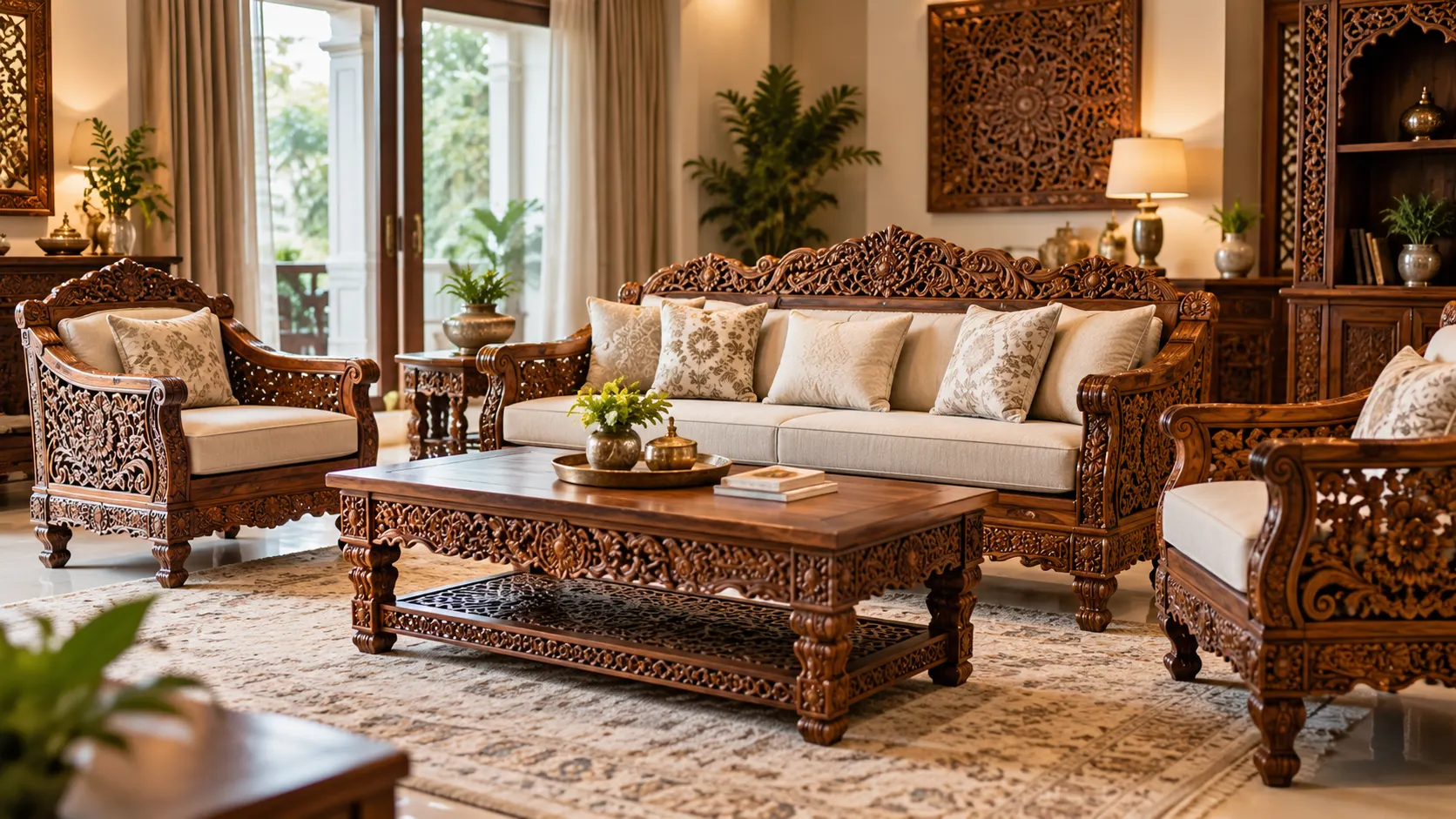
For anyone searching for wooden furniture in Saharanpur, choosing the right piece involves more than selecting an attractive design. The material, construction, finishing, dimensions, maintenance requirements, and suitability for your home all influence whether a furniture purchase will meet your expectations.
Saharanpur, Uttar Pradesh, is recognised for its woodcarving tradition, which includes floral, foliate, geometric, and jaali patterns. The Uttar Pradesh government’s One District One Product (ODOP) portal identifies Saharanpur Wood Craft as a recognised regional craft and records its Geographical Indication certificate date as March 31, 2014.
Odopup
This heritage gives buyers a reason to explore the decorative character of wooden furniture, from carved headboards and chair backs to detailed cabinets and dining furniture. However, not every wooden furniture item sold in the city is necessarily hand-carved, and a decorative appearance alone does not establish the quality of a product.
Whether you are furnishing a new home, upgrading your living room, selecting a bed, or looking for a dining set, you should understand what makes each product suitable for your needs.
Fatima Handicraft’s official furniture collection provides a starting point for exploring its listed furniture categories. This guide explains the craft, common furniture styles, material considerations, quality checks, maintenance practices, and buying decisions that can help you choose with confidence.
1. What Makes Wooden Furniture in Saharanpur Special?
Saharanpur has an established association with traditional woodcraft. Its carved wooden products are known for decorative work that can incorporate floral motifs, leaves, geometric patterns, and openwork designs.
The regional craft combines woodworking with decorative techniques. Depending on the product, these details may be used on furniture, decorative panels, screens, and other wooden objects.
Traditional wooden carving
Carving gives furniture an individual visual character. A headboard may feature floral patterns, a chair back may include geometric detailing, or a cabinet may incorporate decorative panels.
The amount of decoration varies considerably. Some products feature extensive carving across multiple surfaces, while others use small decorative elements to complement a simpler design.
When examining carved wooden furniture, look closely at the pattern consistency, edges, corners, and recessed areas. The finishing should be considered alongside the design.
Craftsmanship beyond appearance
Furniture production involves more than decorative work. Depending on the product and production process, it can include timber preparation, cutting, shaping, carving, joining, assembly, sanding, and finishing.
The quality of the final result depends on how these stages come together. Intricate decoration cannot compensate for unstable joints or unsuitable dimensions.
When buying furniture, ask about the actual materials, construction, finish, and care requirements rather than relying solely on descriptions such as handcrafted or premium.
Traditional and modern design together
Wooden furniture inspired by traditional craft can work well in contemporary interiors. A carved wooden bed, for example, can become the main decorative element in a bedroom with simple bedding and understated bedside tables.
Similarly, a carved chair can add contrast to a living room with neutral upholstery and clean-lined furniture.
The key is to balance decorative detail with the proportions, colours, and practical requirements of the room.
2. Understand Different Types of Wood Used in Furniture
Wood type affects the appearance, construction possibilities, finishing, maintenance, and cost of furniture. Before buying, determine which material is actually used in the product.
Sheesham and teak are associated with Indian woodworking and furniture. Other timber varieties and engineered wood products may also be used, depending on the design and supplier.
Sheesham wood
Sheesham is used in various Indian furniture and woodworking applications. Its grain and natural colour variations can contribute to distinctive furniture designs.
If you are considering a sheesham product, ask the seller to confirm the wood species and which parts of the furniture are made from it.
The frame, panels, decorative components, and internal supports may not all use the same material. Written specifications can help establish what you are purchasing.
Teak wood
Teak is another wood used for furniture and woodworking. Its suitability depends on the design, construction, material specification, and intended use.
Do not identify teak solely by the colour or appearance of a finished surface. Ask for confirmation of the actual material, its use in the product, and the recommended care method.
Other timber varieties
Furniture can be made using a range of timber varieties, each with different characteristics.
The appropriate choice depends on the product’s intended use, design, construction, budget, and maintenance requirements. A buyer should compare material specifications rather than assuming that one wood is automatically the right choice for every situation.
Solid wood versus engineered wood
Solid wood consists of natural wood, while engineered wood products are manufactured using wood fibres, particles, veneers, or bonded layers, depending on the type.
Both categories can serve useful purposes. What matters is whether the selected material is suitable for the furniture and whether the supplier describes it accurately.
Before purchasing, ask:
- Which material is used for the main frame?
- Are panels made from solid wood, engineered wood, or a combination?
- Are veneers or other surface treatments used?
- What finish has been applied?
- What maintenance does the product require?
These questions are especially important when comparing furniture that looks similar but differs in construction.
3. Popular Wooden Furniture Styles in Saharanpur
Different furniture styles suit different interiors. Traditional carving offers decorative character, contemporary designs prioritise simpler lines, and mixed-material furniture combines wood with other surfaces.
Traditional carved wooden furniture
Traditional styles often incorporate decorative headboards, carved chair backs, detailed table edges, and ornamental cabinet panels.
Such furniture can complement interiors with rich wood tones, traditional textiles, patterned rugs, and decorative accessories.
However, heavily carved designs may dominate a small room. Consider the overall scale of the furniture and how it will work alongside existing furnishings.
Contemporary wooden furniture
Contemporary wooden furniture often features clean lines, simpler silhouettes, and restrained detailing.
A straightforward wooden dining table may work well in a modern apartment, while a simple bed frame can complement a wide range of bedding and wall colours.
This style can be particularly useful when you prefer a versatile appearance that remains easy to coordinate with changing interior décor.
Rustic wooden furniture
Rustic-inspired designs may highlight natural-looking grain, visible texture, and understated finishes.
These designs can suit relaxed living areas, natural colour palettes, and interiors that incorporate other textured materials.
The word rustic describes an appearance, not a specific construction standard. Ask the seller about the actual material and surface treatment rather than inferring them from the style.
Mixed-material wooden furniture
Some furniture pieces combine wood with metal, glass, stone, or upholstery.
A wooden dining table with metal supports may suit a contemporary interior, while an upholstered chair with a wooden frame can combine visible craftsmanship with a softer seating surface.
Pay attention to the points where materials connect. The structure should be appropriate for its intended purpose, and the finish should be suitable for regular use.
How to choose the right style
Before deciding, consider your room dimensions, floor colour, natural lighting, wall finishes, and existing furniture.
If the room already contains busy patterns or prominent decorative accessories, simpler furniture may help create balance. A carved piece can still stand out without requiring every item in the room to have similar details.
Choose a style that reflects your preferences while remaining practical for everyday use.
4. Choosing Wooden Furniture for Each Room
Wooden furniture should be selected according to its function, not just its appearance. Different rooms have different requirements for comfort, space, storage, and maintenance.
Wooden sofa frames for living rooms
A wooden sofa frame can add structural detail and decorative character to a living room. Some designs feature exposed wooden arms or carved elements, while others combine a wooden supporting frame with upholstery.
Consider the seating capacity, frame construction, cushion comfort, upholstery, and full dimensions. Inspect the visible joints and ask which materials are used in the supporting structure.
Fatima Handicraft’s sofa set collection lists wooden-frame sofas alongside other sofa styles. Review individual product descriptions to establish the specifications of the item you are considering.
Wooden beds for bedrooms
A wooden bed can become the focal point of a bedroom. Carved headboards provide decorative detail, while simpler frames can suit contemporary or compact spaces.
Measure the available area before selecting the bed. Confirm the full external dimensions, mattress compatibility, supporting structure, and any storage features.
The Fatima Handicraft premium bed collection provides a starting point for exploring bedroom furniture options.
Wooden dining tables and chairs
Dining furniture should be stable, appropriately sized, and comfortable for the people who use it regularly.
Consider the table size, chair height, legroom, surface finish, and space needed to move around the dining area. A large carved dining set may suit a spacious dining room, while a simpler design may fit a smaller home more comfortably.
Explore the dining furniture collection and confirm the dimensions and materials of the particular product before ordering.
Wooden tables for work and daily use
Study desks, office tables, coffee tables, and occasional tables serve different purposes.
An office table may need room for a computer, monitor, documents, and cables. A coffee table should suit the height and arrangement of the surrounding seating.
Check the work surface, legroom, stability, storage requirements, and ease of cleaning. A good design should support the way you intend to use the furniture.
5. How to Check Wooden Furniture Quality Before Buying
A furniture piece should look attractive and function properly. You can assess several visible aspects before committing to a purchase.
Inspect joints and structural components
Look at areas where components connect, such as chair legs, table frames, bed joints, sofa supports, and cabinet assemblies.
Check for unexpected movement, gaps, poorly aligned components, rough edges, or signs of inadequate assembly.
For a table or chair, inspect stability on a level surface. For wardrobes, check whether the doors and drawers move properly. For a sofa, ask about the supporting frame in addition to testing the comfort.
These inspections cannot guarantee future performance, but they can help identify visible problems.
Examine the surface finish
Look at the furniture under good lighting. Check for inconsistent colouring, scratches, rough surfaces, chipped edges, or uneven coatings.
On carved furniture, inspect the recessed areas and the transitions between decorative patterns and flat surfaces.
Ask which finish has been used and how it should be maintained. A cleaning method that works for one surface may not be suitable for another.
Check doors, drawers, and fittings
If the furniture has moving components, test them where possible.
Open and close drawers, wardrobes, and cabinets. Examine alignment, handles, hinges, and other fittings. For reclining or extending furniture, ask how the mechanism works and whether the item needs additional operating space.
Ask for material specifications
Two products can have similar appearances while using different materials and construction methods.
Request written information about the frame, panels, finish, dimensions, and any important components. This is particularly helpful for larger or more expensive purchases.
6. Measure Your Room Before Choosing Furniture
Even well-made furniture may not be suitable if it does not fit the available space.
Measure the placement area
Record the width, depth, and height of the space where the furniture will go. Consider nearby doors, windows, electrical outlets, and existing furniture.
Check whether wardrobe doors, drawers, recliners, and dining chairs have enough space to operate properly.
Check the delivery route
Large furniture must also pass through the access route to the room.
Measure doorways, corridors, staircase turns, and lift dimensions where applicable. Ask the supplier whether the product arrives assembled or requires assembly at the destination.
Visualise the layout
Use masking tape to outline the proposed furniture footprint on the floor. This can help you see how much room the item will occupy before making a purchase.
Consider how people will move through the room and whether the furniture will obstruct access to other items.
7. Is Custom Wooden Furniture the Right Choice?
Custom wooden furniture can be useful when standard designs do not meet your room dimensions, storage requirements, or design preferences.
However, the availability of customisation should be confirmed for the particular product and supplier.
Prepare a clear design brief
Explain where the furniture will be used and what it needs to do. Include the preferred dimensions, materials, finish, colour, storage arrangement, and decorative details.
Reference photographs or a rough drawing can help communicate your expectations.
For example, a wardrobe might need additional hanging space, while a dining table may need to fit a narrow room. Clear requirements help the supplier understand the intended design.
Request a drawing or written specification
For a complex piece, ask for a dimensioned drawing or specification sheet before approving the order.
Confirm the external dimensions, internal storage layout where applicable, material details, and finish.
Make sure the approved design is practical for the intended room and use.
Confirm the cost and order terms
Before paying, agree on the final design, materials, price, estimated completion time, payment schedule, delivery arrangements, and applicable cancellation or return conditions.
Ask how changes will be handled after approval and whether they may affect the price or timeline.
Fatima Handicraft’s Contact Us page describes custom furniture design and interior furniture solutions. Contact the business to confirm which designs, materials, dimensions, and finishes can be accommodated for your requirements.
8. How to Maintain Wooden Furniture
Proper care can help wooden furniture remain presentable and functional. The right routine depends on the material, finish, construction, and manufacturer’s instructions.
Dust regularly
Use a soft, clean cloth to remove dust. For carved furniture, pay attention to recessed details where dust can collect.
Avoid abrasive cleaning tools that may scratch the surface or damage the finish.
Clean spills promptly
Wipe spills promptly with a soft cloth and use the cleaning method recommended for the specific finish.
Do not assume that every wooden surface can tolerate the same cleaning products. Ask the seller for care instructions if the material or surface treatment is unclear.
Manage sunlight and moisture
Prolonged direct sunlight can affect the appearance of some finishes, while moisture and environmental changes can affect wooden furniture.
Where practical, avoid repeated wetting and follow the care recommendations supplied with the item.
Avoid unsuitable polishing products
Oils, waxes, polishes, and repair products are not automatically suitable for every finish.
Check the furniture’s care instructions before applying any treatment. For significant surface damage, seek appropriate professional advice rather than attempting an unsuitable repair.
Maintain moving components
Inspect hinges, drawer fittings, and other moving components periodically. Follow the manufacturer’s instructions for maintenance and repairs.
Consistent care is preferable to using aggressive cleaning methods after the surface has deteriorated.
9. Compare Prices and Purchase Terms Carefully
Price matters, but the cheapest item is not necessarily the best value. Products can differ in dimensions, material, construction, finish, design complexity, and included services.
Request a complete quotation
Ask the seller to specify the product, quantity, dimensions, materials, finish, and included components.
Clarify whether applicable delivery, packaging, installation, and other charges are included in the quoted price.
For customised furniture, make sure the quotation corresponds to the final approved design.
Compare equivalent products
When comparing quotations, check that the specifications are similar.
For example, two wooden dining tables may look alike while differing in dimensions, construction, materials, and finishing. A fair price comparison should account for those differences.
Understand the purchase terms
Before paying, review the applicable payment, cancellation, return, replacement, and damage-reporting conditions.
Keep the quotation, order confirmation, receipt, approved design, and written communications together for reference.
10. Common Mistakes to Avoid When Buying Wooden Furniture
Choosing only by appearance: Attractive carving or a glossy finish does not establish construction quality.
Assuming every item is solid wood: Confirm the materials used in the frame, panels, and other components.
Ignoring dimensions: Measure the intended placement area and delivery route before ordering.
Overlooking carved details: Inspect decorative recesses, edges, joints, and other areas where finishing problems may be visible.
Comparing prices without comparing specifications: Check materials, dimensions, construction, finish, and included services.
Approving custom furniture too quickly: Confirm the final design, measurements, cost, and order terms in writing.
Using unsuitable cleaning products: Follow maintenance instructions that apply to the actual material and finish.
Ignoring delivery arrangements: Confirm the expected timing, applicable charges, installation responsibilities, and procedures for reporting damage.
A careful comparison makes it easier to select furniture that suits both the interior and your everyday requirements.
Frequently Asked Questions
1. Why is Saharanpur known for wooden carving?
Saharanpur has a recognised woodcraft tradition associated with floral, foliate, geometric, and jaali patterns. The Uttar Pradesh government’s ODOP portal identifies Saharanpur Wood Craft as a regional craft and records its GI certificate date as March 31, 2014.
Odopup
2. Which wood is best for wooden furniture?
The best material depends on the product, intended use, construction, appearance, budget, and maintenance preferences. Ask the seller to identify the actual wood species and explain which parts of the furniture use it.
3. How can I identify good-quality wooden furniture?
Inspect the joints, supporting structure, finish, alignment, and moving components. Ask about the materials and request written product specifications where necessary.
4. Is carved wooden furniture suitable for modern homes?
Yes. A carved wooden bed, chair, or table can serve as a decorative focal point in a contemporary interior. Pair more elaborate furniture with simpler furnishings to maintain visual balance.
5. Is custom wooden furniture worth considering?
Custom furniture can be useful when standard products do not meet your room dimensions or storage needs. Confirm the design, material, finish, cost, completion estimate, and order terms before approving production.
6. How should I clean wooden furniture?
Dust regularly with a soft cloth, clean spills promptly, and follow the care instructions for the specific finish. Avoid harsh or abrasive products unless the manufacturer confirms they are appropriate.
7. How do I choose wooden furniture for a small room?
Measure the available space and select pieces with appropriate proportions. Consider simpler designs, practical storage, and enough room for doors, drawers, and everyday movement.
8. What should I ask before ordering furniture from Fatima Handicraft?
Confirm the materials, dimensions, finish, total price, delivery arrangements, and applicable purchase terms. For customised items, request written confirmation of the final specifications.
Conclusion: Choose Wooden Furniture That Fits Your Home
Wooden furniture can combine everyday functionality with distinctive design. Saharanpur’s recognised woodcraft tradition provides inspiration for buyers who appreciate carved details and traditional woodworking, while contemporary designs offer alternatives for simpler interiors.
When making your choice, consider the actual materials, construction, finish, dimensions, maintenance, and total cost. Verify product specifications instead of relying solely on appearance or promotional descriptions.
Fatima Handicraft’s website provides a starting point for exploring sofa sets, beds, dining furniture, chairs, tables, and other listed categories. Browse the Fatima Handicraft furniture collection to explore the available range, or visit the Contact Us page to discuss your requirements and confirm product-specific details.
The best wooden furniture is not necessarily the most elaborate or expensive. It is the piece that suits your space, supports your daily needs, reflects your preferred style, and meets the specifications you have verified.


Leave a Reply